
When Will Mortgage Rates Drop?

Once we’re in a recession, and one is coming very soon

In my last post I shared that I see a recession brewing, leading to lower mortgage rates. Well, I think the stage is being set for our next recession right now. Here are 5 big story lines that just came out this week that will lead to slower economic growth (& thus lower mortgage rates!):

#1) Ongoing union strikes – the auto industry strikes are intensifying according to reports from earlier today, so this will slow down a cornerstone of our economy to the tune of $500 million a day in lost productivity.

#2) Government shutdowns – Congress avoided a shut down on Oct 1 by kicking the can down the road with a 45-day budget. But the unprecedented ousting of Speaker Kevin McCarthy could have a greater tumultuous impact on our government operations than a run-of-the-mill budget standoff. Regardless, a prolonged shutdown or inefficiencies within Congress in the coming weeks will impact economic output and further deteriorate the world’s faith in US fiscal responsibility.

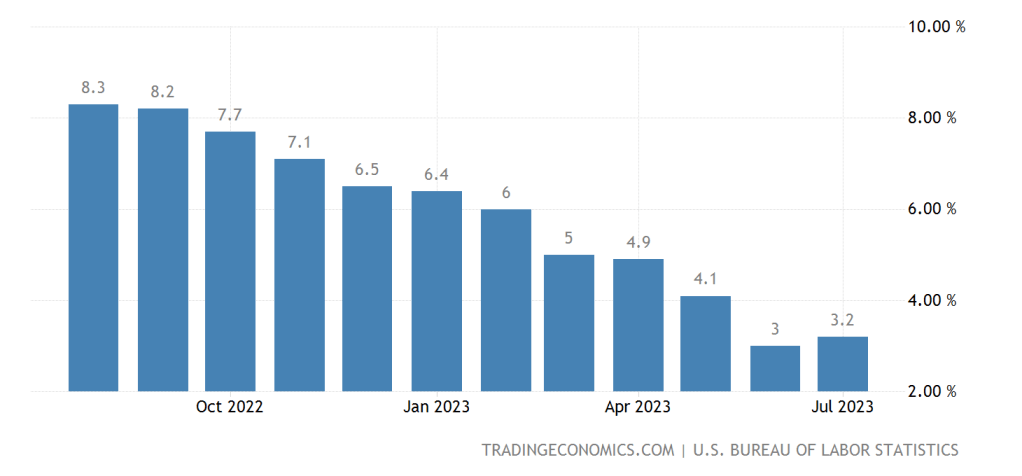
#3) Inflation is cooling – the latest core Personal Consumption Expenditure index came in at a .1% monthly increase, below expectations and heading in the right direction. This is a sign The Fed’s policies are working at slowing the economy and tipping things into recessionary territory.

#4) Student loan payments resume soon – nearly $1.6 trillion dollars in student loans will resume repayment status on Sunday (Oct 1st). After a 3.5 year reprieve, over 40 million Americans will now be tightening their purse strings as more of their monthly budget will go to paying their student loans.

#5) surging oil prices – gas prices are rising at an odd time of year (after Labor Day).  Other than during  the initial outbreak of the war in Ukraine, gas prices have never been higher.  This will crimp consumers spending habits as we enter the important holiday season.

Many economists believe consumer spending has been what’s propped up our economy in recent months despite rising interest rates.  Well, I believe that comes to an end this coming quarter, and a lousy holiday shopping season will be the beginning of a recession and interest rates will recede in early 2024.

I’ll be keeping my eye on these developing stories in the coming months, as they not only impact the direction of mortgage rates but they will also set the landscape for the 2024 election season. Buckle up! It should be a wild 12 months ahead. Thanks as always for watching, reading and tuning into my content. Have a great weekend!

Something’s STILL Wrong With Spreads

Another graphical anomaly is foreshadowing a recession (& lower mortgage rates)

If you’ve been following me, then you’ve heard me harping all summer long on how the interest rate markets are out of whack. With each passing month, more signals pop up to remind us that we are not in normal economic times.

Earlier this month, The Fed held their Federal Funds Rate steady at 5.5%. This is the highest level since 2001, but how high it is RELATIVE TO other interest rates is what makes things so odd.

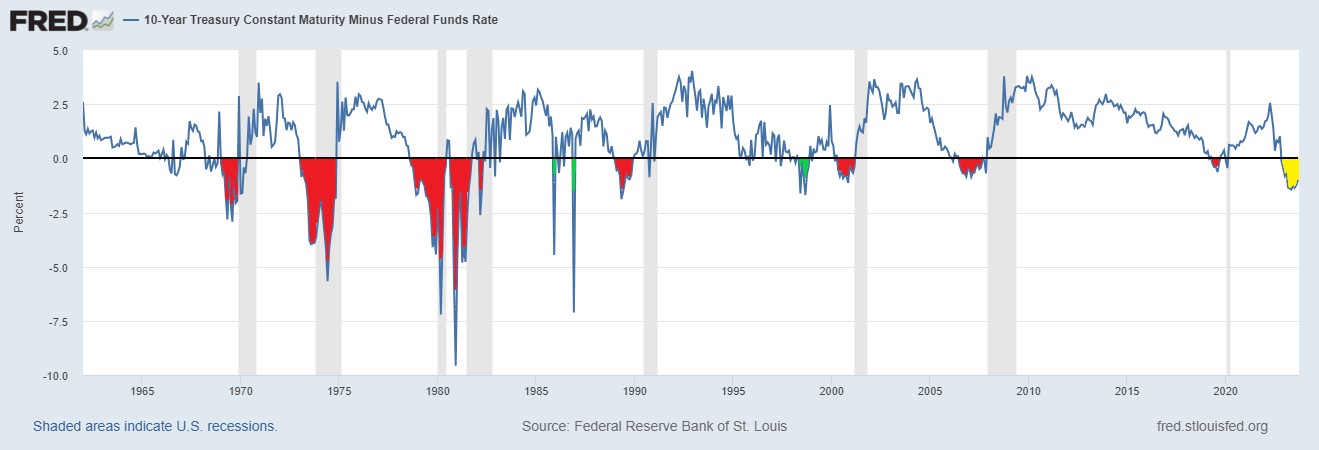
Below is a line showing the “spread” (simply known as the difference) between the rate on a 10-yr US Treasury Bond and the Federal Funds Rate. Typically, the 10-yr bond rate is higher than the Federal Funds Rate, making the spread a positive number. In fact, from 2002-2022, the spread has been negative for only 20 months during those 20 years.

But occasionally the Federal Funds Rate increases to unusually high levels, and this spread becomes a negative number. I’ve color-coded those extended negative territories in red, and you can see that a recession has shortly followed every time (illustrated by the gray vertical bands on the timeline). We have escaped a recession despite a negative spread a few times (shown in green), but those were for very brief periods before the spread quickly jumped back into positive terrirory.

Presently, we have witnessed a negative spread between the 10-yr bond rate and the Federal Funds Rate for nearly a year (yellow area on the chart). This is foreshadowing another upcoming recession, but the silver lining is that mortgage rates ALWAYS drop during recessionary times.

When will the recession hit? When will mortgage rates fall? I have some thoughts on that, but will save them for my next post. Thanks for reading, and stay tuned for more.

Something’s Wrong With Spreads

More evidence lower mortgage rates should be on their way

At the beginning of summer, I wrote a fun Top Gun themed post about how inverted “yield curves” are an indicator that lower mortgage rates are on their way (click on the link above for a refresher).

As we now approach the end of summer, I’m doubling down on my projection based on another rare occurrence in the financial markets.  Hear me out, check out the new charts, and let me know if you agree. 

For those of us in the mortgage industry, its no secret that mortgage rates are closely correlated to the rates of US bonds.  Here is a 40-year chart that shows these rates go up & down together.

But they don’t always go up & down by the SAME AMOUNTS.  Investors of mortgages (blue line) always command a higher rate of return than a US Bond (red line).  Why?  Risk.  Investors feel its more likely a homeowner will default on their mortgage debt than the US government will default on their debt (debatable, I know, but not for this post).  Whenever an investor takes on more risk, they want more return. 

Here is a chart that combines the blue and red lines from above into a simple visual showing the difference (or “spread”) between the two rates over time.

Over this same 40-yr period, the typical spread has been between 1.5%-2.0%, with a median of 1.67%.  There have been a few instances when this margin has increased to over 2% during uncertain economic times (DotCom bubble, 9/11, Covid lockdowns).  And when this spread increases to drastic levels over 2.5% it very quickly boomerangs back to levels below the orange line.  But recently the spread has been hovering around 3%, nearly twice the historical norm and unprecedented during this time frame.  Why???  Same answer…RISK!  But a different kind of risk…prepayment risk.

Mortgage investments are a little different from government bonds in that most investors don’t expect a 30-yr mortgage to be a 30-yr investment.  Many scenarios could cause a mortgage to be paid off ahead of schedule (sell the home, refinance, etc.).  And the sooner a mortgage is paid off, more risk to the investor via stunted returns.  The unprecedented, sustained level of the spread at nearly 3% is proof investors see high risk in buying mortgages in today’s market.  Its clearly not due to foreclosure risk (those levels just hit 40+ year lows).  Rather, its due to prepayment risk, as investors anticipate refinance opportunities for current borrowers when mortgage rates fall in the near future.

Lets recap:

  • The spread between mortgage rates and bond rates is crazy-high – when a metric is this out of whack, don’t expect it to stay that way for long
  • Investors see increased risk in mortgages due to refinances in the near future – the simple fact smart investors think new mortgages will have short shelf-lives is very telling
  • Either mortgage rates need to fall or US bond rates need to rise to bring the spread back in line with historical norms – Given that inflation is trending down and stock markets are already approaching all-time highs, it’s a safe bet bond rates won’t rise dramatically.  Instead, expect mortgage rates to fall.

Dow Jones is near its all-time high

Inflation has returned to normal

The investors, and ultimately the financial markets, are telling us that mortgage rates will be falling.  And likely they’ll be falling sooner than later.  I will be keeping my eye on this market indicator, among others, as we track the mortgage and real estate markets. What will be important to forecast is what may happen when mortgage rates do finally fall. Do you have any guesses? You know I do!!! Stay tuned for more economic insight and projections. Thanks as always for reading.

Got Debt?  You Are Not Alone

If your credit card balances are creeping up on you, it may be time for a cash-out refinance

Total US household debt continues to climb even as borrowing costs rise with higher interest rates, particularly on credit cards. The total debt level recently hit a record amount of $17 trillion…with a T!!! 

Over $1 TRILLION is attributed to credit card debt! Many of us are facing harder times with the on-going economic slow down & lingering inflation. With credit card balances & their interest rates at all-time highs, it may be time to consider a cash-out refinance to consolidate high-rate loans

Home values remain reasonably resilient & most homeowners have record levels of home equity. Even with elevated mortgage rates, it may be better to roll higher rate credit card debt into a new mortgage balance.

Has the economic slowdown forced you to borrow more against credit cards, cars, and education? Borrowing from your equity at a low rate to pay off higher rate debt will lower your overall monthly payments and lower your interest costs over the long-run. I can help you determine the “blended rate” of your various debts, the effective interest rate you’re paying across all of your loans (including your mortgage). If your blended rate is over 6%, then its time to consider a cash-out refinance.

Consider the following graph…according to CreditCards.com the national average credit card interest rate is over 20%!. With The Fed suggesting they don’t plan to reduce the Federal Funds Rate any time soon, this will lead to high credit card rates for some time.

Let us help alleviate the financial stress of carrying high credit card balances at astronomically high interest rates by refinancing them into a lower fixed rate mortgage.

Mid-Year Market Check-In

Just when I thought the market couldn’t get any wonkier…

The real estate market is never boring. I’ll give it that.  After a Jekyll & Hyde year in 2022 when things began red hot and ended ice cold, I was expecting a rather “ho-hum” year for the 2023 Sacramento real estate market. So far, its been anything but routine. Let’s dive into the details and stats to find out where we may be going. 

1. The “bear” market would end;
2. Interest rates would settle down; &
3. Home prices would bottom out.

Well, if you’ve been paying even casual attention to the market and economy, you know that I got 2 out of 3 right.  While the market has indeed come out of hibernation with increasing home sales and an end to steep price declines, it has done so in spite of interest rates remaining stubbornly high.  This has come as quite a surprise to nearly everyone.  After all, higher rates were the reason for the late 2022 market slowdown, so why would anyone expect the market to rebound if rates remained at elevated levels???

The surprise X-Factor in 2023 has been the astonishingly low number of homes for sale.  Let me try to put this in perspective…in every year from 2013 to 2019 (pre-pandemic market), the greater Sacramento region saw 23,000 to 24,000 homes for sale from January thru July.  So far this year, that figure stands at nearly half that amount at 13,000!!!  Below is a great statistical visual from my favorite appraiser, Ryan Lundquist, that clearly shows how odd this year has been. Every month has seen significantly fewer new listings come to market compared to historical norms.

So even with mortgage rates remaining around 7% and pricing many buyers out of the market, home prices have actually been able to increase since there are so few options for the remaining buyers to purchase.

Think of it this way: let’s say you want to buy the new iPhone 15 that comes out next month. Then right before the release, its discovered that all of the 85 million new iPhones produced have a fatal manufacturing defect and can’t be sold.

As a result, you will think twice about buying or upgrading your phone since this market disruption would drastically increase the prices of the limited remaining phones in the market. You will likely just hold onto your old phone even if it had problems as the cost to upgrade is just too great.

That’s precisely what’s happened in the real estate market! But instead of a manufacturing defect/recall keeping homes out of the market, high mortgage rates are to blame, acting like “golden handcuffs” on homeowners. Golden handcuffs are often referred to when employees feel locked into their jobs because the conditional future benefits are too good to walk away from today. Similarly, homeowners feel locked into their homes as more than half have mortgage rates under 4%. The cost of “upgrading” is simply too great, so they stick with their current home even if its not really what they want.

All of this means is it’s the PERFECT time to sell if you don’t have to buy again in the same market or if you owe little or nothing on your home mortgage.  Home values are arguably over-inflated due to the low supply, and there are still buyers able, willing, and needing to purchase.  If you have considered selling your home, we should chat about how to best take advantage of the current market conditions.

Interest rates were to blame for 2022’s abrupt halt & 2023’s oddities, so its very important we keep an eye on the rate horizon if we want to predict where the market is heading as we approach 2024. I wrote a fun Top Gun themed post earlier this summer about how I think mortgage rates will improve later this year, and another post adding to that argument is in the works (coming later this month). Lower mortgage rates will break the chains for many would-be handcuffed sellers, improve affordability for buyers, and ultimately lead to a revival for this incredibly sedated real estate market.

If you may be in the market to buy or sell in the next 12 months, call me now to discuss your circumstances and how I can help you navigate this ever-evolving market. There are indeed opportunities out there if you know where to look and have professional guidance.

Lower Mortgage Rates Are Coming

Why?  Because we are inverted!

The most famous use of that “inverted” phrase naturally comes from my favorite childhood movie, Top Gun. Now, as a grown up who owns a mortgage & real estate brokerage and enjoys studying economics, being inverted has an entirely different meaning that generally precedes recessions and times of lower mortgage rates!

Talk To Me, Goose!

First a quick econ lesson…the yield curve is a graphical representation of the interest rates (or yields) on bonds of different maturities. Typically, longer-term bonds have higher yields compared to shorter-term bonds. This upward sloping yield curve illustrated from June 2013 is the normal or positive yield curve, making it look like the front side of a jump ramp.

Great Balls Of Fire!

However, when the yield curve inverts, it suggests that investors have a pessimistic outlook on the future economic conditions. Check out how different today’s yield curve looks, like the backside landing of that same jump ramp!

An inverted yield curve refers to a situation where the yields on shorter-term bonds are actually higher than the yields on longer-term bonds. This phenomenon is considered significant because it has historically been a reliable indicator of an impending economic recession.

What Were You Doing There?

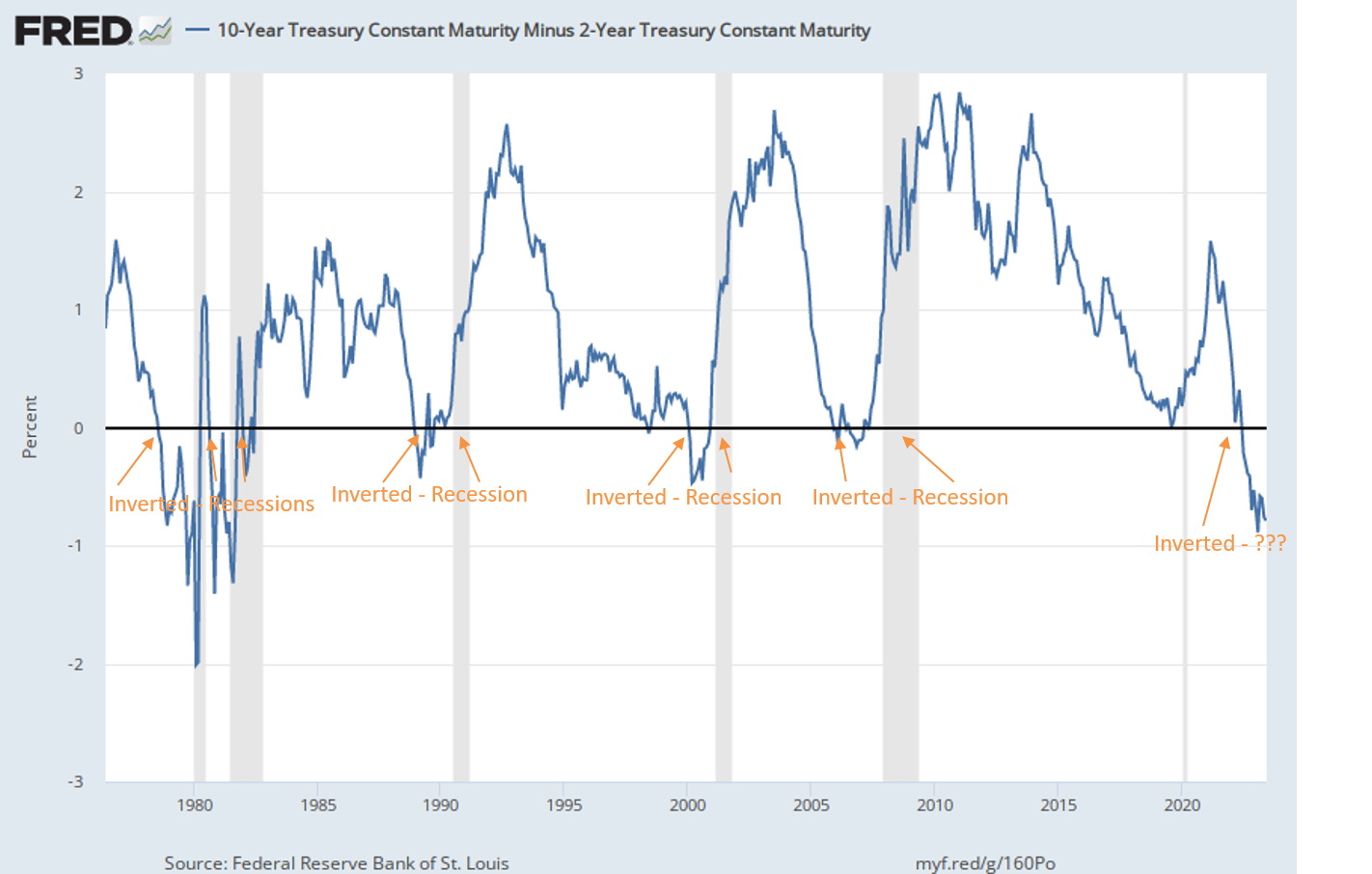
Communicating! An inverted yield curve is a way of our markets sounding the warning bells. Over the last 50 years, every time the yield curve has gone negative (below the 0% flat line), an economic recession has followed (shown by the vertical gray bands). Presently, the yield curve is in deeper negative territory than the previous 3 cycles, and has been flirting with levels not seen in my lifetime (I’m a young Gen-Xer, for the record). In other words, this inversion is deep, serious, and prolonged. We need to pay attention to it!

I Feel The Need, The Need For…

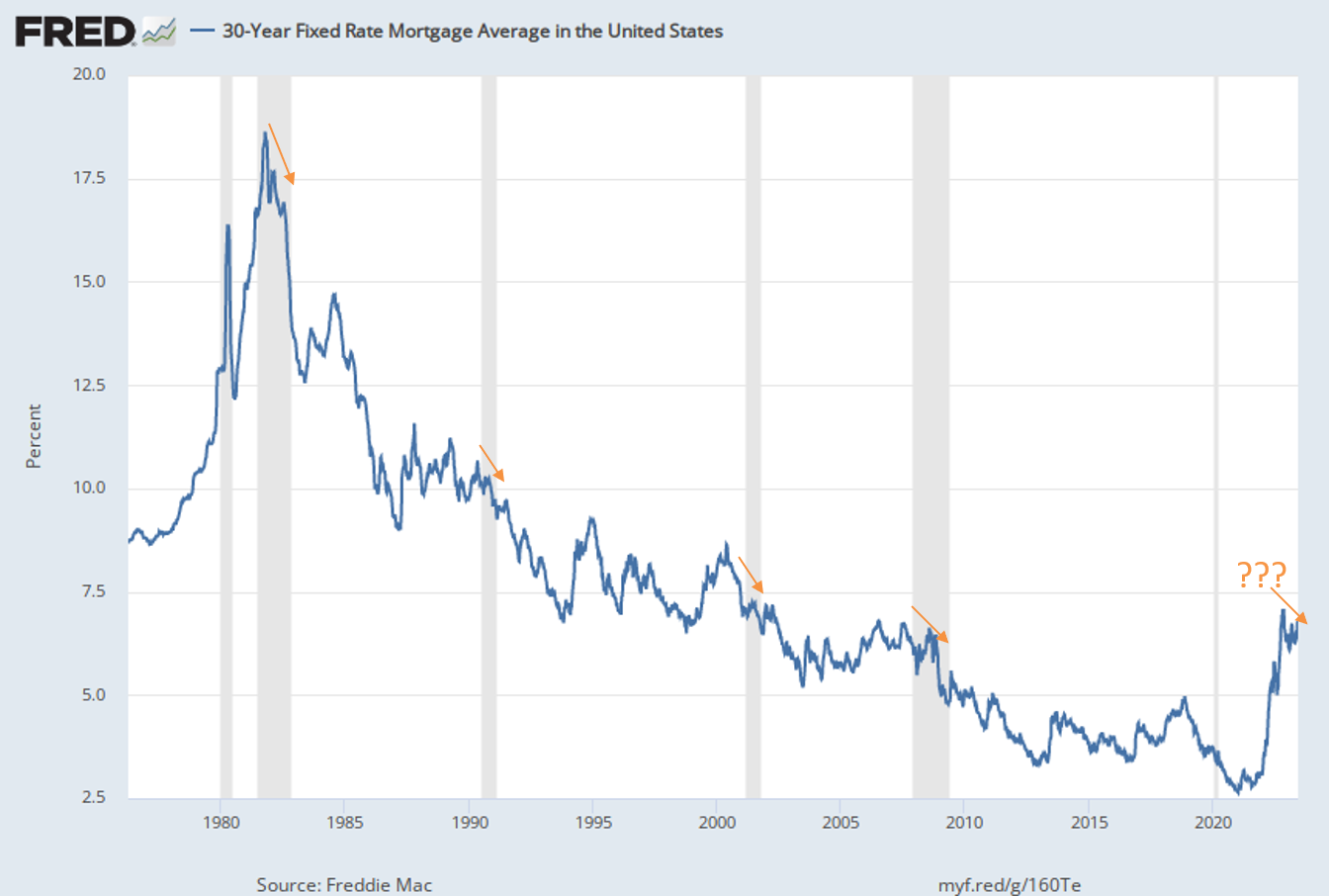
Lower rates!!! These recessionary periods also tend to lower borrowing costs, especially mortgage rates. In each recession for the last 40 years, we have seen mortgage rates drop during these slower economic times. Could we be heading for a steep decline in mortgage rates???

It’s important to note that while an inverted yield curve has been a reliable indicator in the past, it doesn’t guarantee a recession nor lower mortgage rates will occur. It is merely a signal that suggests increased risks and the need for careful monitoring of economic conditions. Nevertheless, I think this reliable tell-tale sign is clear that lower rates are on their way. Stay tuned for more statistical insight on the state of our market, economy, and interest rates. Thanks as always for reading; you can be my wingman anytime! 😉

May The Fourth Be With You

Our Team Put Together These Parody Videos for your May The Fourth enjoyment

In a galaxy not so far away, The Fed is at war with rates. Will their efforts spark a New Hope for the economy? Or will a recession Strike Back?

For the 10th straight meeting, The Fed has raised the federal funds rate. Have they gone “Kylo Ren” on inflation? We think so! The good news is their aggressive attack on inflation will likely lead to lower mortgage rates later this year.

CA Dream For All Loan Example

Our team has become well-versed with the new California Dream For All Loan program and has it available to offer to our first-time home buyer clients.  Lets unpack a common example and see how this program functions.

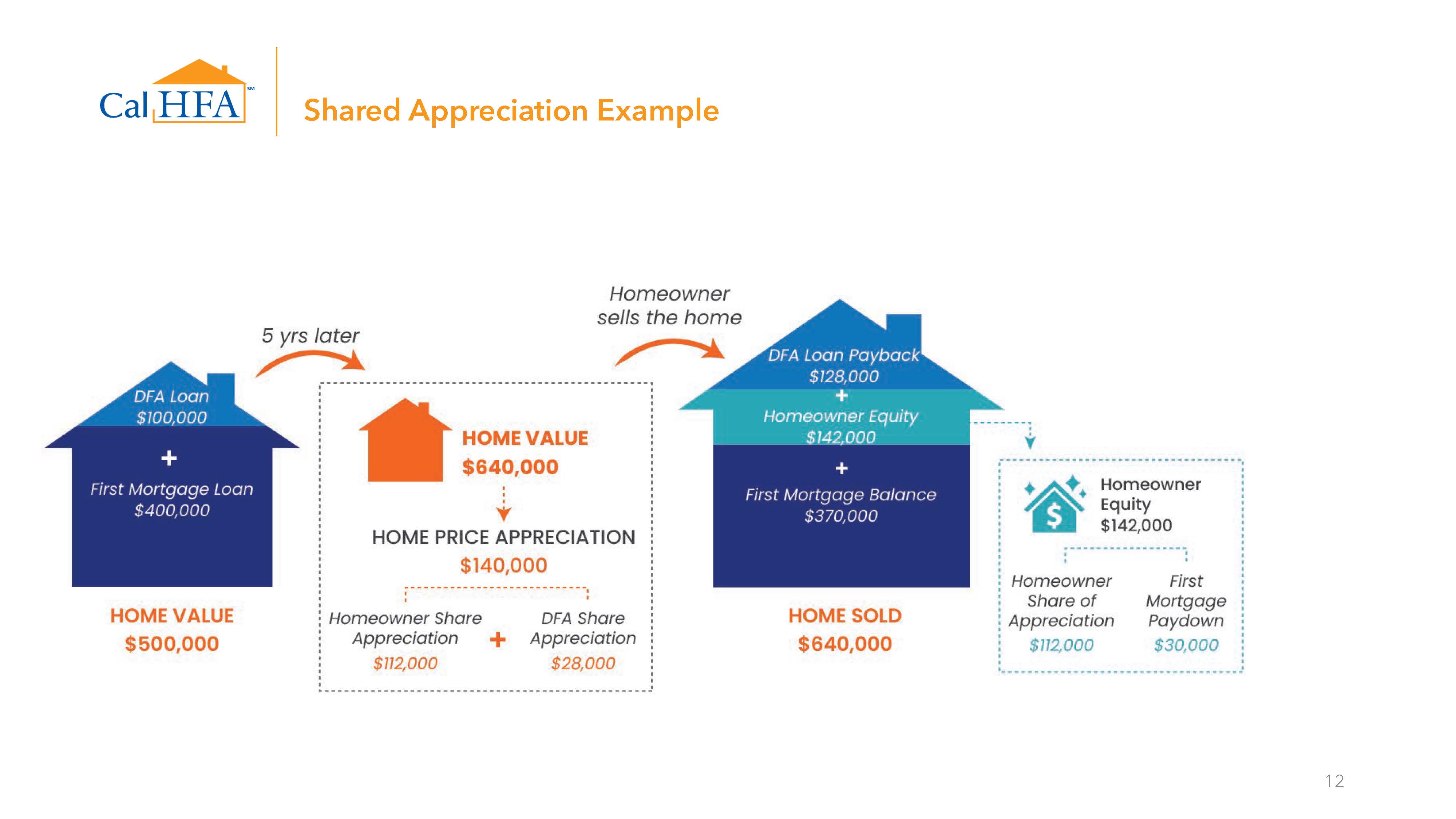
Assume someone buys a home for $500,000.  They would obtain a traditional 30-year fixed loan at a fair market interest rate for 80% of the purchase price, making the loan $400,000.  Now instead of making a $100,000 down payment, something most first-time home buyers don’t have, they obtain a 2nd mortgage from the state of California for the needed $100,000.  No monthly payments are required and no interest accrues on this $100,000 2nd mortgage.  But it is not a grant; it is not free money.  This 2nd mortgage is a Shared Appreciation Loan, meaning that when the home buyer goes to sell the property they have to pay back the loan in full AND share in the gained equity with the state of California.

Lets see how those numbers work.  Lets assume this $500,000 home appreciates by a modest 5% per year.  After 5 years, the home is now worth $640,000; it has appreciated by $140,000.  Most folks utilizing this program will need to pay back 20% of that appreciation to the state, in this case $28,000 dollars.  So when they sell the home, they will pay $128K to the Dream For All mortgage, the outstanding balance of the 1st mortgage that started at $400,000, leaving them with $142,000 in equity before selling costs.

So, in a nutshell, a borrower who put in nothing for a down payment ends up earning nearly $150,000 in realized equity.  And to do so, they had to pay $28,000 in shared appreciation to borrow a $100,000 loan, which essentially works out to be an annualized interest rate of 6%. 

Here’s another example created by CalHFA worth watching:

Like any loan program, there are qualifying restrictions. Contact my team and I for the full details on how first-time buyers can take advantage of this new loan!

VIDEO – 6% Rates Mean HOPE Ahead For Market

This 6-6-6 sign is indeed a great omen for buyers!

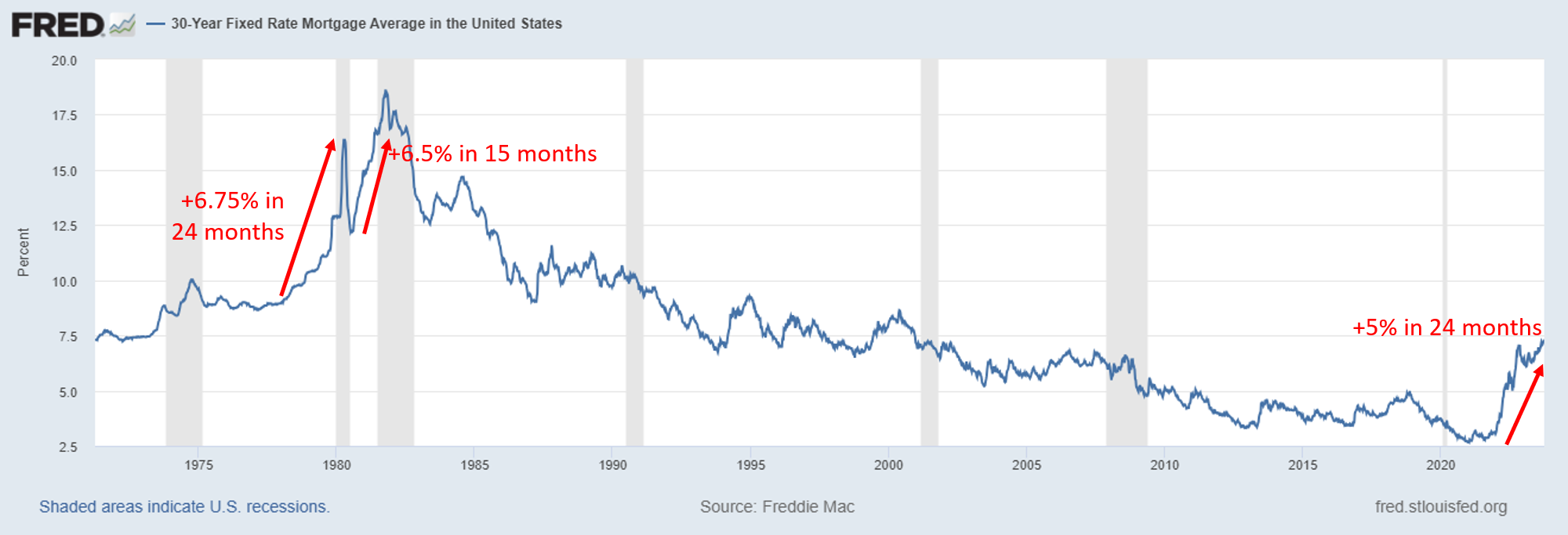
Back in September, I explained in a video post the troubles ahead for our market as 30-yr mortgage rates hit 7% for the first time in 20 years.  Homes were becoming increasingly unaffordable as high rates and home values squeezed many would-be buyers out of the market.

Thankfully, some balance has been restored as both rates and values have receded, meaning there is now hope ahead for the market.  Today I want to walk you through some points to see how today’s affordability is back in line with historical norms, and why if you are a buyer you should be getting excited for a home purchase in the year ahead. Either click on the video above or read below for the full insight.

First a brief history overview…over this past summer, annual inflation was running at over 8% and consistently higher than market forecasts. There seemed to be no end in sight for price increases everywhere, including rates for mortgages.  As a result, mortgage rates skyrocketed from 5% to nearly 7.5% in 2 months. 

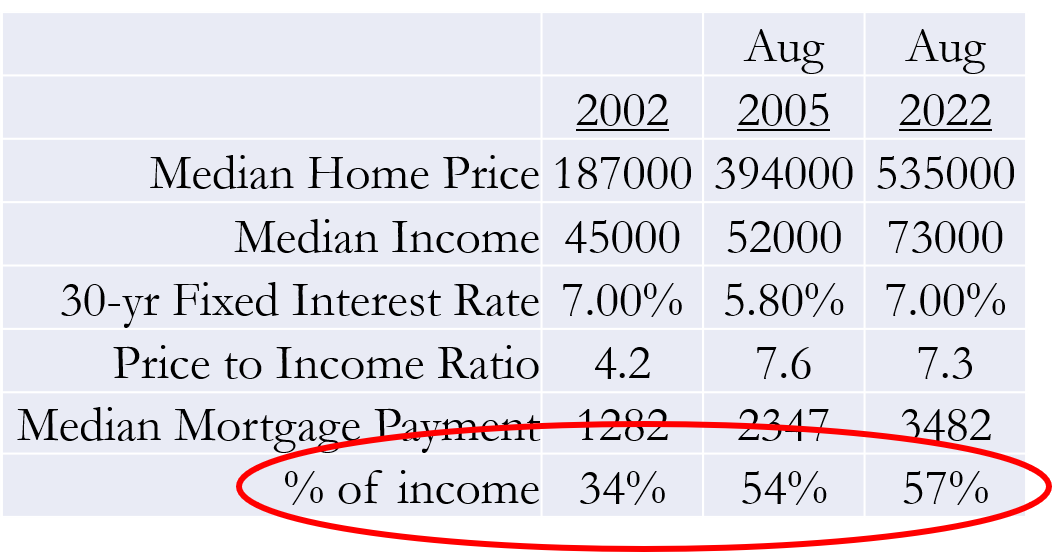
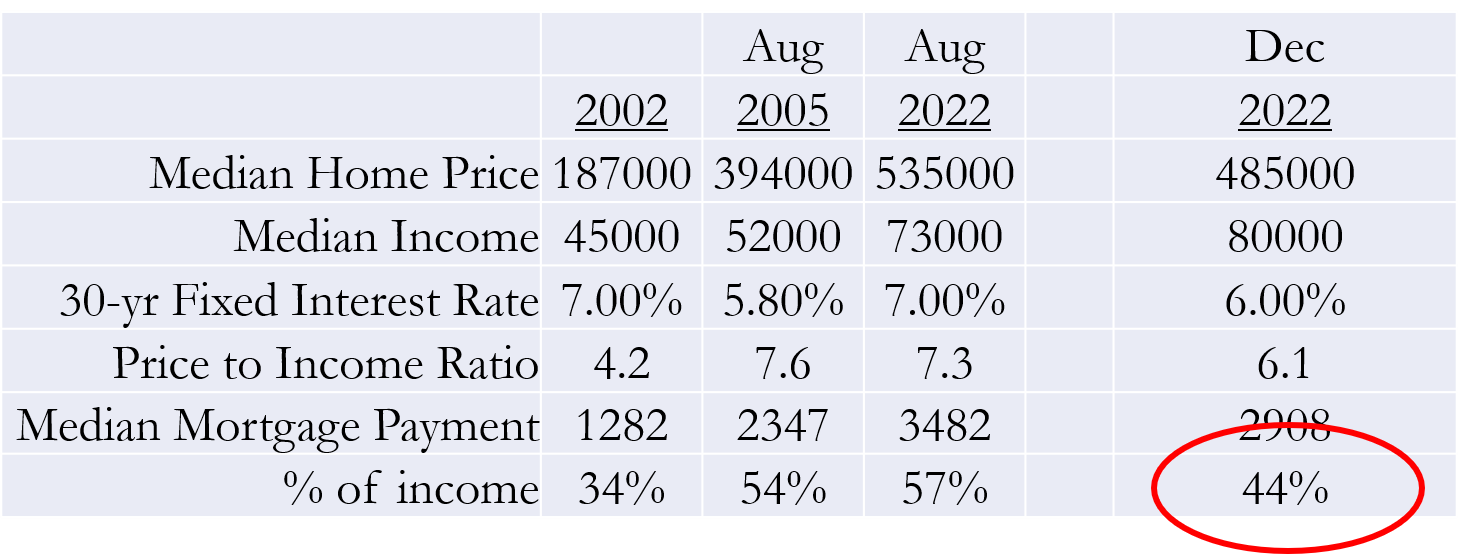
That’s when I did my last post on this topic to sound the alarms about housing becoming increasingly unaffordable.  I compared the present market to the last time rates hit 7% in 2002 and the last time home values peaked in 2005 to show today’s market was less affordable than either of those eras.  This was gauged by the percentage of income going to buying a median priced home by a household earning median income.

I illustrated how either home values would need to fall 21% or rates drop to 4% for the market to come back in balance, and I ultimately forecasted that we would see decreases in both in the months ahead.

That projection has mostly played out, largely thanks to inflation readings falling faster than expected.  Mortgage rates have slid back down to 6% and home values have dropped another 9% since August. 

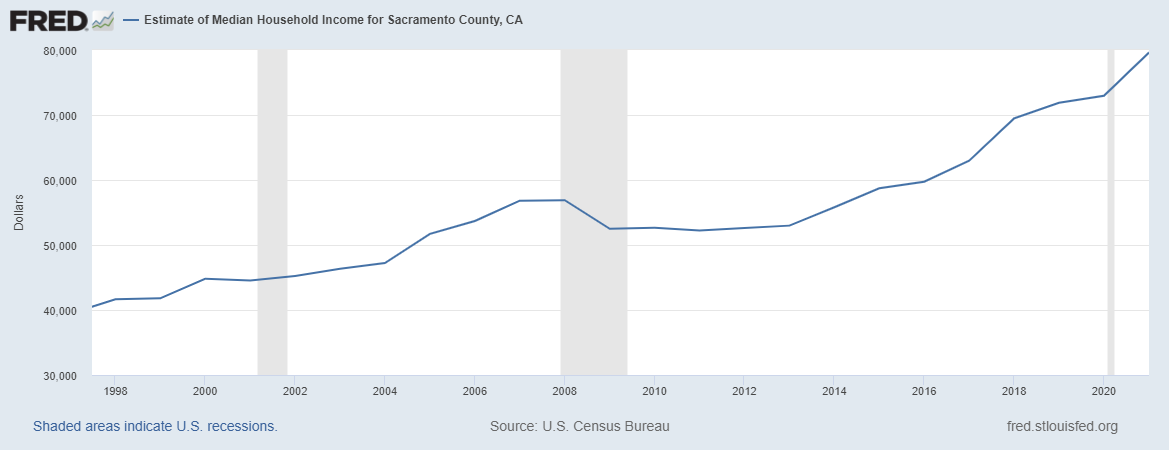
The US Census Department also recently released an updated estimate for Sacramento household median income, which saw an expected increase due to inflation pressures as well.

When accounting for these market changes, the percentage of income going to a mortgage payment is no longer at record highs.  In other words, we should not expect home values to continue to fall due to affordability issues.  Now, will they still fall anyways?  Perhaps they do still fall a bit further because markets don’t always act logically and predictably.  

But that’s all the more reason if you’re a buyer and have been waiting to purchase to jump back in the market.  These stats show support for current market values, and the short-term projection is for mortgage rates to remain at or below 6%.  Many sellers are panicking as the average listing is on the market for 6 weeks and selling for 6% off their asking prices. 

These 3 sixes are a literal jackpot sign for buyers entering the market.  Thru January we’ve seen signs of the market picking back up and home prices stabilizing, so buyers should feel confident getting out there and ahead of the spring time rush. 

Let my team and I help you get pre-approved for financing, find the right home in your area that meets your budget, and negotiate a deal for you in this buyer’s market.  We’re here to help you from start to finish, so please reach out with any questions and interest you have on buying a home now or in the future.

Matt’s 2023 Real Estate Market Forecast

Expect more sales, lower rates, and bottoming home values

2022 was a rough year for the real estate market.  Interest rates and home values both changed course at the fastest pace on record, causing many potential buyers & sellers to hit the pause button on their transaction efforts.  As we enter a new year, sellers likely have been waiting for the rain to finally end to list their homes, while buyers have been waiting for lower rates and home values before jumping back in the market.  Will the current “bear” real estate market end?  Will a “bull” market return?  Read more as I share my insight on what’s ahead for our market (& read all the way to the end for why they are called bear & bull markets!)

The bear market will come out of hibernation (but don’t expect a bull market to return)

Most regions throughout California have become “bear” markets, meaning home values have fallen consistently and considerably.  Take Folsom, for example, where the average home price fell 25% from May to December.  That’s a sobering statistic for current home owners considering selling, but keep in mind the current values are still higher than they ever have been if you exclude the insane Covid-related boom. These recent declines are largely due to higher interest rates and hesitant home buyers, but also because of SIGNIFICANTLY fewer home sales.  To be precise, the 4th quarter (October-December) was the slowest quarter in over 20 years in Sacramento County, with fewer than 30 homes selling per day in a county comprised of over 600,000 housing units!

Average Folsom home prices over the last 15 months. From the May high of $959,000, the average home price has plummeted to $721,000 (nearly 25%) in only 7 months!

Expect the market to pick back up in 2023 as more sellers put their homes up for sale and buyers eagerly purchase them.  Affordability has improved due to declining home values, thus inspiring first-time home buyers to get back into the market.  After 3+ years of competitive bidding wars and few homes for sale, buyers are now calling the shots in transactions.  The typical listing is selling for 6% less than the asking price, with sellers often paying credits towards closing costs and home repairs.  Many buyers will score great bargains on homes this year, but they shouldn’t expect rapid price appreciation to return to the market just yet.

Interest rates will settle down (but don’t expect record lows to return)

Interest rate declines are also helping affordability.  Yes, you read that right…interest rates are going down!  After peaking at nearly 7.5% in October, 30-yr fixed rates are settling down near 6% in recent days, and likely poised to drop further in the months ahead (more on that in a future post). 

While rates aren’t likely to plummet back to 3%, 30-yr rates in the ~5% range will help to stabilize the real estate market and reduce the sting buyers feel when calculating their monthly payments.

Sacramento home values will bottom out (but don’t expect big price gains to return)

The worst is likely behind us with falling home prices.  After dropping 2-3% per month since May, Sacramento area home values should find a bottom sometime this year.  Rent rates remain high everywhere (1-bedroom apartments are renting for over $2,000/month!), which will help prop up home values as tenants weigh the options between renting and buying.  2023 buyers may risk some short-term losses in equity, but that is a small risk to take for the big rewards of purchasing a home in this strong buyer’s market.  After 6 months of price drops, the average listing is on the market for 6 weeks & selling for 6% off the asking price.  These 6s may be a troubling sign for sellers, but for buyers it’s a proverbial jackpot! Get out in the market and let me help you dictate the terms of your next home purchase!

2023 will feel like an awakening after a dormant second-half of last year.  If you are a seller, you need to make worthwhile preparations to your property to make it stand out above the competition. If you are a buyer, you need to “start your engines” and follow my top 5 tips from my prior post to get ready to decisively act when the right home comes up for sale.  Both sides need to be partnered with an experienced mortgage and real estate broker like me who can navigate you through this changing market.  I look forward to helping more clients in the weeks ahead prepare for their 2023 transactions.

PS – Bull & Bear markets earned their names based on how these animals attack. A bull lowers its head and then surges its horns upwards in an attack, hence why a bull market is known as one that is on the upswing. Bears, however, get high and then attack down with their giant paws. When a financial market (like today’s real estate market) is going down in value, its known as a bear market. Now you know!