Cheap Mortgages May Last as Investors Replace Fed

In February I posted in my 2010 Market Forecast that I thought mortgage rates would remain low this year in spite of the phase-out of the Fed’s massive involvement in the mortgage-backed-securities market.  That phase-out was completed earlier this week, and just today I read an article  that supports my theory.  Yes, the Fed is out, but private investors are back buying mortgages, and willing to do so at lower yields meaning lower interest rates for borrowers.

The article has a fair amount of financial jargon, but the crux of it is investors are back buying mortgages because of 1.) more capital due to improving financial markets; 2.) lower risk due to tighter lending requirements and stabilizing real estate markets; & 3.) continued subdued inflation.  Read the whole Bllomberg article written by  Kathleen M. Howley by clicking this link.

MORE Tax Credits Available for California Home Buyers, but You Better Act FAST

While the biggest political news of last week was surely the controversial Health Care Reform Bill, California also passed a housing bill that is sure to aid the state’s housing market.  A few months ago I shared that Governor Schwarzenegger, in his January State of the State address, said he wanted to create state tax credits for California home buyers. Today, I’m happy to report that last Thursday he signed a bill that gives both first-time home buyers and buyers of new homes state tax credits up to $10,000.

As I understand it, this tax credit is IN ADDITION to the current $8,000 Federal tax credit that is available until April 30th, 2010.  This means that if you are a first-time home buyer in California and get into contract to purchase a primary residence in the next 30 days, you could be eligible for $18,000 in tax credits!!!  Quite incredible.

But as lucrative as this new California bill sounds, it is as equally illusive.  Let me explain.

California passed a similar $100 million bill in 2009 that gave credits to buyers of new homes only, and funding ran out in 4 short months, even in a year that saw record-low California new home sales.  This latest bill provides the same $100 million for new home buyers and an additional $100 million for 1st time home buyers. through December 2010 OR until funding is exhausted.  With housing affordability at reasonable levels in many parts of the state, expect the funding for both of these credits to also dry up quickly; possibly within weeks after the May 1st commencement date!!!  Consider these numbers:

So, what’s the moral of the story?  Incentives (especially illusive ones) should not drive the decision to purchase a home.  Yes, another amazing incentive has been thrown at 1st-time home buyers, but it is simply the cherry on top of an already delicious ice cream sundae.  If you are considering home ownership, good for you!  Homes in most areas are more affordable now than a decade ago.  But, be sure you’re buying to enjoy the whole sundae (home), not just the maraschino cherries (tax credits & low interest rates). 

*Please consult a tax professional before assuming you may qualify for any of the aforementioned state or federal tax credits.

Only 22% of California consumers were happy with their real estate agent in 2009? WOW!

Check out these excerpts of a surprising article I read this morning about California homeowner’s dissatisfaction with their real estate agents:

RIS Media – It doesn’t take a genius to know that events of the past few years have greatly affected the public’s view of real estate agents. Now that image is below that of used car salesmen (except, perhaps, Toyota used car salesmen!) and many are publicly stating that the agent’s time is over, that maybe it’s time to take corrective action. What do you think?

The study reported on consumer responses to one simple proposition: “Yes, I would use the same agent” over the six-year period from 2004 to 2009. It reports that 79% of respondents said “Yes” in 2004 but only 22% said “Yes” in 2009.

The article suggests that these statistics could be due to negative experiences with the difficult real estate market, and that home owners are turning their frustrations towards their agents.

Nevertheless, this article makes me feel very fortunate that during this same time frame, 94% of my surveyed clients said they would “absolutely” return to me for their mortgage and real estate needs.  My loyal clients have valued my services and enabled me to run a referral-based business in spite of a difficult real estate market.  Thank you!  Thank you!  Thank you!

Matt’s 2010 Market Forecast

My annual forecast has always been the most popular post every year, so I hope you continue to find this year’s insightful and valuable.  2010 has been blazing by, and I’m just getting around to writing my annual real estate market projections and reviewing my previous year’s forecast.  I’ve been somewhat tardy in writing as I’m very busy in tending to my client’s buying, selling, and financing needs.  My full plate is one of many indicators that tell me 2010 will be an active year for the Sacramento real estate market.

With so many variables to the housing market, I focus my predictions on three broad categories: supply, demand, and interest rates.

Supply
‘09 Projection: Supply will remain low until April because many banks opted to not foreclose on properties during December and January…The number of homes for sale will roller-coaster up and down throughout the year, and end up close to it’s current level.
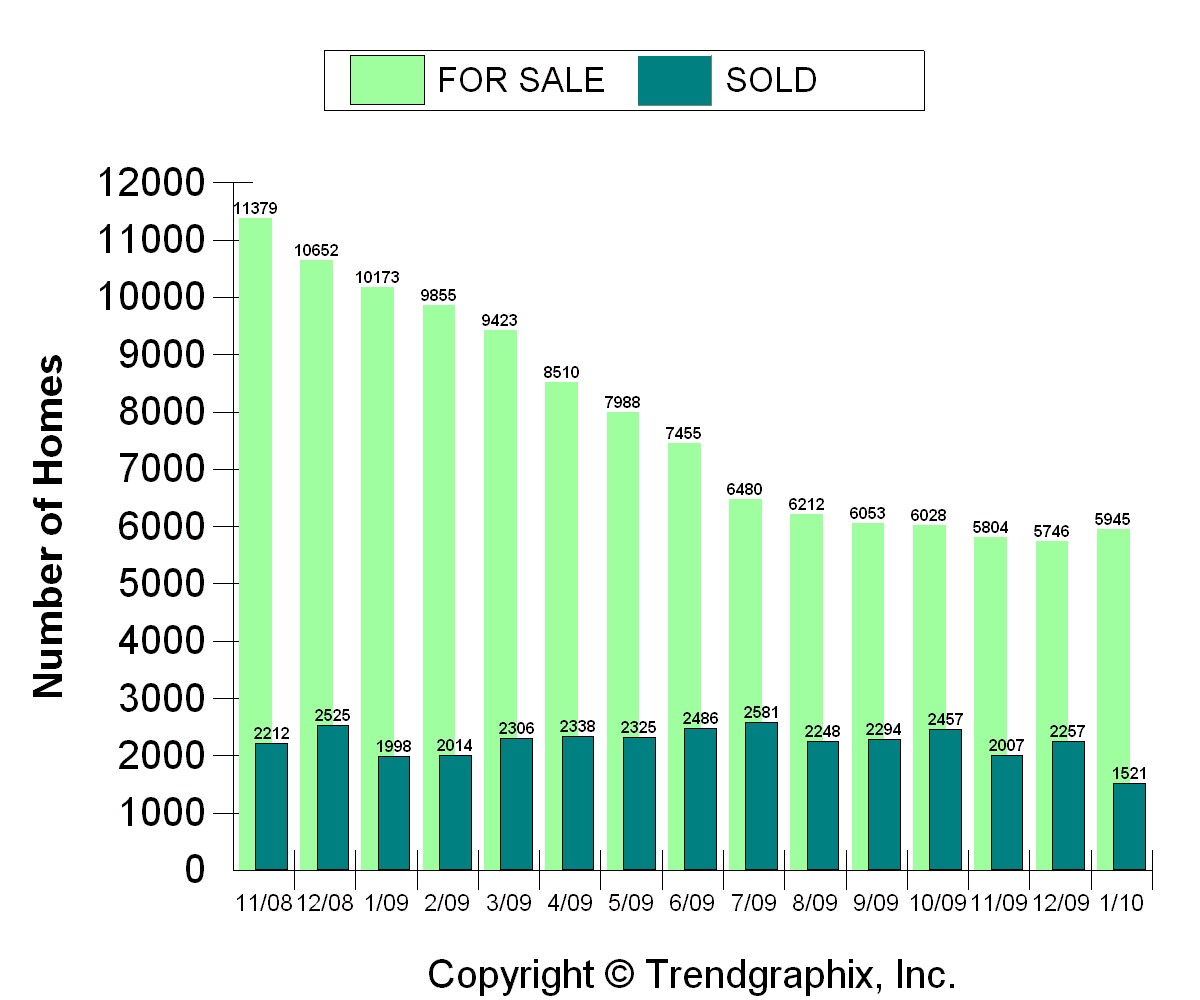
‘09 Result: The low supply of homes was the biggest real estate surprise in 2009.  Instead of the up and down roller-coaster trend I had predicted, the number of homes for sale continued to drop throughout the year (see graph). 
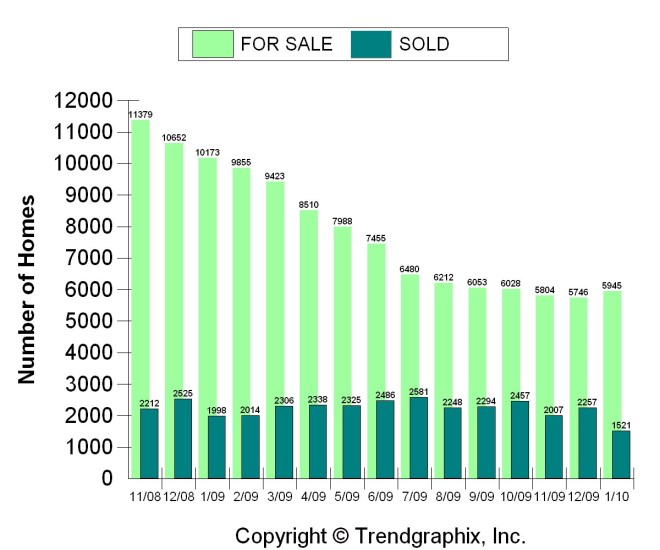
 

Currently, the Sacramento area has nearly ½ the number of homes for sale compared to a year ago.  Let me repeat…50% less homes for sale!  In my opinion, the reduced inventory of homes was the single, largest factor in stabilizing home values; more influential than tax incentives or low interest rates.  The surprising low number of homes for sale was likely due to “phantom inventory,” homes banks have foreclosed on but have not put back on the market for resale.  This decision by the banks has reduced the ratio of bank owned homes for sale on the market from 1 in 3 in December 2008 to nearly 1 in 6 currently.
’10 Projection: Inventory will be higher than 2009 levels.  Banks will begin to release more of their shadow inventory, and more short-sale listings will be successfully sold as improved processes are implemented.  Most major mortgage servicing companies are preparing to adopt streamlined, universal short-sale policies proposed by the Home Affordable Foreclosure Alternatives (HAFA) program.  If this program proves effective, more “upside-down” home owners will be inclined to sell and more home buyers will pursue short-sale properties. 

Demand
’09 Projection: While the global economic crisis has raised fears as to whether home prices will continue to fall, I believe low prices, low interest rates, and tax incentives will keep entry-level buyers extremely active in 2009.
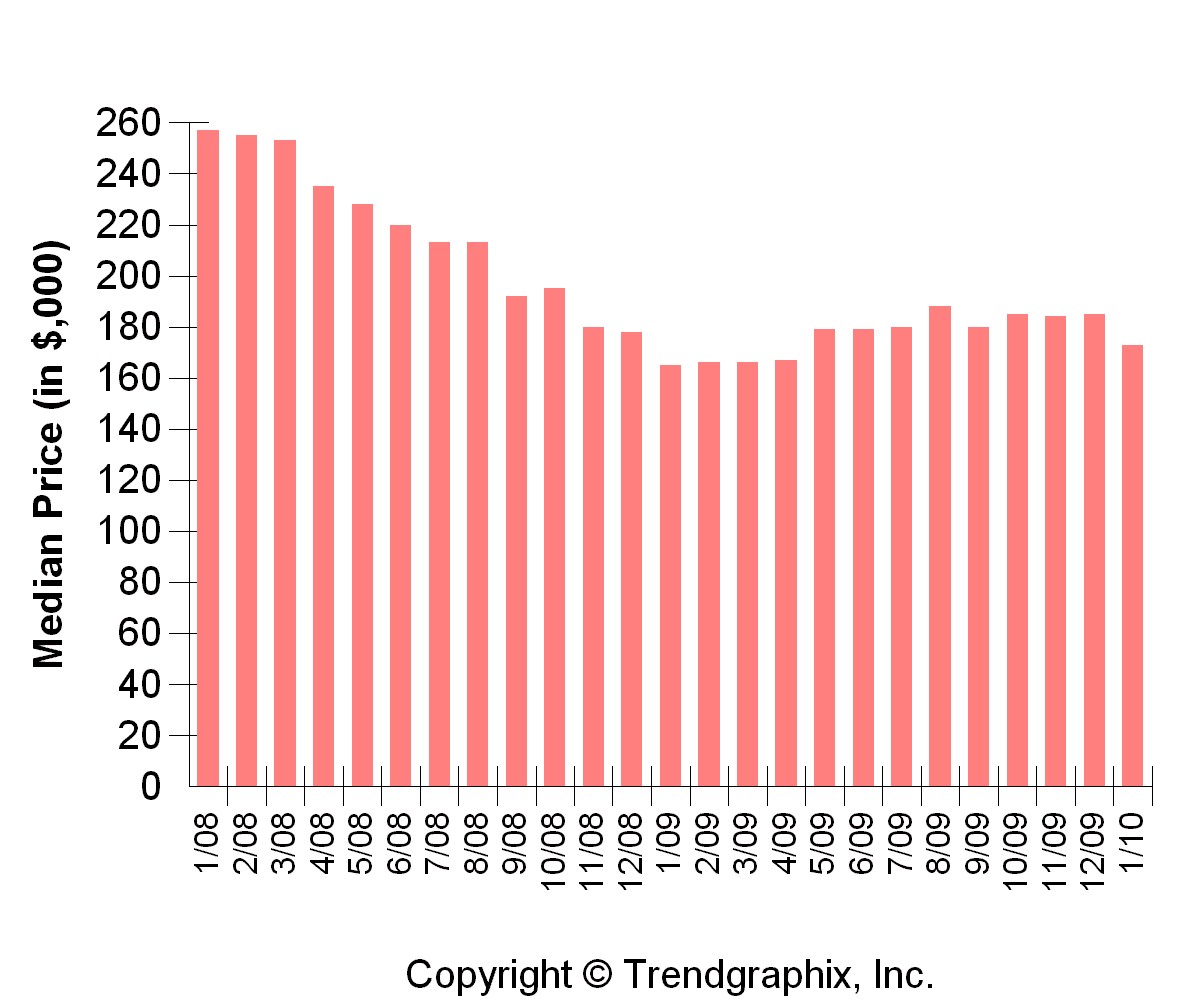
‘09 Result: Gobs of 1st-timers purchased homes in 2009.  Since May of ‘09, Sacramento county homes priced under $200,000 have, on average, sold for more than asking price; a clear sign of strong buyer demand as buyers compete with each other.  For the first time in 4 years, the county’s median home price increased.
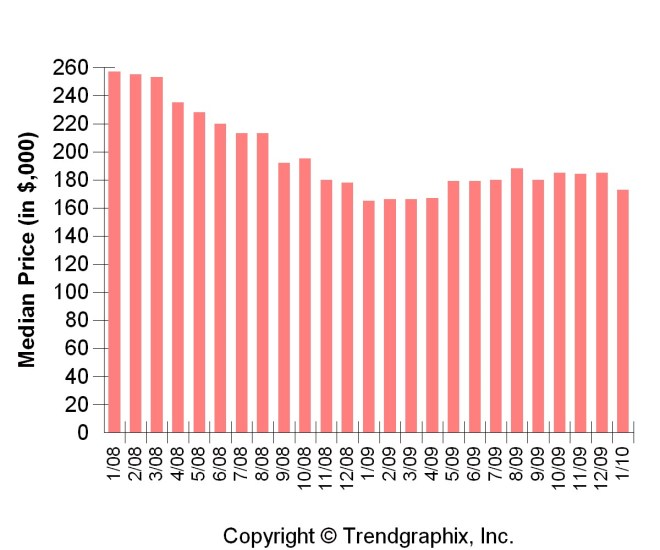

’10 Projection: Tax incentives will no longer be necessary to entice people to buy homes, and so the current tax credits will expire on April 30th, 2010 and not renews.  Sacramento saw a 4.8% INCREASE in the median home price over 2009 (see above), and this small yet steady rise will continue into 2010.  Demand will still be high in 2010 as buyers confidently (and rightfully) believe the bottom of the cycle is here.

Interest Rates
’09 Projection: With continued government intervention, mortgage rates will remain well below 6% for the year.  Lending guidelines will remain tight, but those able to qualify will have unbelievable refinance and home buying opportunities.
‘09 Result: In 2009 the Federal Reserve Bank bought 1.25 TRILLION DOLLARS in mortgage-backed-securities to keep mortgage rates low.  They did so because traditional investors refused to buy mortgages…they had lost faith in the system.  When the government swept in, interest rates immediately dropped more than a full percent, and fixed rates remained near 5% for most of 2009.
’10 Projection: Many predict mortgage rates to skyrocket above 6.0% in the coming months and stop any type of real estate market recovery.  The Fed has announced they will pull out of the mortgage-backed-securities market in March 2010.  The simple line of thinking is that rates were above 6% before the Fed got involved, so they’ll go back above 6% when they get out.  I don’t agree with this argument.  When the government intervened back in November 2008, the financial world seemed to be crumbling.  Investors were running scared from everything, including mortgages.  Fast-forward to February 2010 and things are immensely better.  They’re not great, but they are better.  Investors are now looking to buy assets again, but they want safety.  Mortgages have become a much safer investment as lending standards have tightened and home values in many areas have stopped falling.  If investors are ready again to buy mortgages (which I think they are), then that means they’ll be willing to do so at lower interest rates.  So, while I do expect mortgage rates to rise this year compared to 2009 levels, 30-yr fixed rates will stay below 6%.

Add it all up, and 2010 will be a year of recovery for Sacramento real estate.  Systemic challenges still abound, but overall this year will continue to be a wonderful time for home buyers, with now through April being the ideal time with low rates, low prices, and big tax incentives.  Tax credits to 1st-time and “move-up” buyers expire on April 30th.  If you’ve been considering buying a home for either personal or investment purposes, give me a call to discuss your options and see if you can take advantage of these ideal factors.

Thanks for reading.

Even more tax credits for California home buyers on the way?

I always swore I’m not a political person.  But I see that my last two posts (this one included) have political content and commentary.  Sign of the times?  Or a sign that I’m changing?  Hmmm…

Getting on topic, last night Gov. Arnold Schwarzenegger gave his final State of the State address.  I doubt most folks watched it (you can click here to read and watch his full speech), but there was plenty of bold talk in the governor’s speech.  Like most political speeches, time will tell if any of Arnie’s twilight-talk will turn into legislative action, but one suggesion that may grow legs is a proposal to expand California’s tax credits to home buyers.

In 2009, California home buyers were eligible to receive a $10,000 state tax credit if purchasing a NEW home (existing homes were excluded from the credit).  This program proved popular as the $100 million allocation ran out faster than expected.  This state program’s popularity, in conjunction with the current federal home buying tax credit program that many credit to stabilizing the national housing market, will likely force state legislatures to look closely at the governor’s proposal.

If you are a potential home buyer in California in 2010, it is conceivable that you could qualify for up to a total of $18,000 in tax credits ($10K state and $8K federal).  Keep an eye out for news on this pending legislation that will now work through the Sacramento Capital.  And as always, check back here for insightful updates from me.

Home Buyer Tax Credit Extension Nearly a Done Deal

The popular $8000 federal tax credit for 1st-time home buyers is set to expire on November 30th.  Recent insight from the floor in the Senate, however, indicates that legislators are very close to approving extending the credit through June 2010 and expanding it to move-up buyers.  Check this article out for the full scoop.

Expect Mortgage Rates to Rise

If you’ve had refinancing on the brain, you may want to put that thought into action soon. The Fed recently announced the subsidies that have artificially pushed mortgage rates to record low levels through most of 2009 will end in the first quarter of 2010.   Read this article to get a summary of how and why the government has kept rates incredibly low, and why their slow pull out of the mortgage market will force rates up.  According to its author, “It is a given that once the Fed ceases its purchases (of mortgage-backed-securities), interest rates will climb significantly higher … most likely back above the 6 percent area.”

If you are an eligible homeowner who would benefit from a refinance, I encourage you to act now before rates go up.  Contact me and I’d be happy to determine what options you may have.

Mortgage Rate Rally!!!

stock-market-trading-floor1

I watched the movie Wall Street last week (1980s classic with Michael Douglas and Charlie Sheen), and I had to laugh at the scenes of the stock market trading floor where traders are buying and selling stocks in a frenzy during a stock market rally.  I chuckled, thinking things don’t work like that anymore with increased technology and market efficiencies in today’s stock market.  The days of frenzied brokers are a thing of the past, I thought!

Ironically, I found myself today inside the frenzied pit of a mortgage market rally as mortgage interest rates have plummeted below 5% for conforming 30 year fixed loans, below 4.5% for 15 year fixed loans, and 4.25% for 10 year fixed loans!  I’ve tried to be on the phone with as many clients as possible because, as with any market rally, you never know when it will stop and you don’t want your clients to miss the boat.  I was just like those crazed traders on the trading floor trying to get great deals for my clients before the deals are gone!

As the day winds down, rates have continued to remain incredibly low for qualified home owners and buyers.  Tomorrow has the potential to be an even better day with a very important unemployment report scheduled to be released.  If our country’s monthly unemployment report shows higher than expected unemployment numbers, mortgage rates may fall even more!!!  If you want to talk about your refinance options, please give me a call as soon as possible to discuss your options.  Or, please let your friends and family know that you heard from your awesome mortgage and real estate consultant for life that mortgage rates are low and they too should consider refinancing or buying.  Regardless, I appreciate you reading my memos.  Now, I’ve got to slip my colored jacket back on, dive into the pit, and get back to locking more low rates!

Waiting for the market to bottom out? You may be too late!

I’ve repeatedly been asked when I thought the Sacramento housing market would bottom out.  My answer was always the same: “The only way to see the bottom is to be past it.”

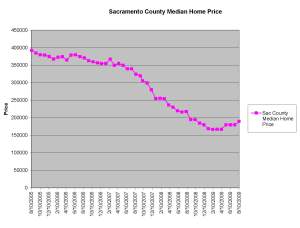
The latest home sale statistics show that the bottom of Sacramento’s housing market may be behind us.  The median home price in Sacramento County in August was $190,000.  Compared to February 2009’s reading at $167,000, that represents a 13.8% increase in Sac-town’s median home price.  The graph below shows how a trough in the median home price has developed over the last nine months.

The last 9 months show a trough starting to form on Sac-town's median home price
The last 9 months shows a trough developing

Market timing is more luck than skill.  For those waiting to time the bottom, you may be a few months late.  But, that doesn’t mean you’ve missed your chance at buying a home at an incredible value.  There are still 2,993 properties for sale in Sacramento for less than $190,000.  Opportunities still abound for those decisive enough to follow the facts

Study finds walkable neighborhoods command higher prices

A report done by CEOs for Cities concluded that walkable communities command higher prices for their homes.  Hopefully this and other studies will steer city planning across our country towards more mixed use, higher density development as opposed to segregatedly zoned suburban sprawl.

Curious about how your neighborhood ranks in walkability?  Go to www.walkscore.com. Very cool tool!